

Graduate Qualities
The following graduate qualities reflect the skills I have developed throughout my Masters of Diagnostic Radiography and how I apply them to my clinical practice.
Inventiveness
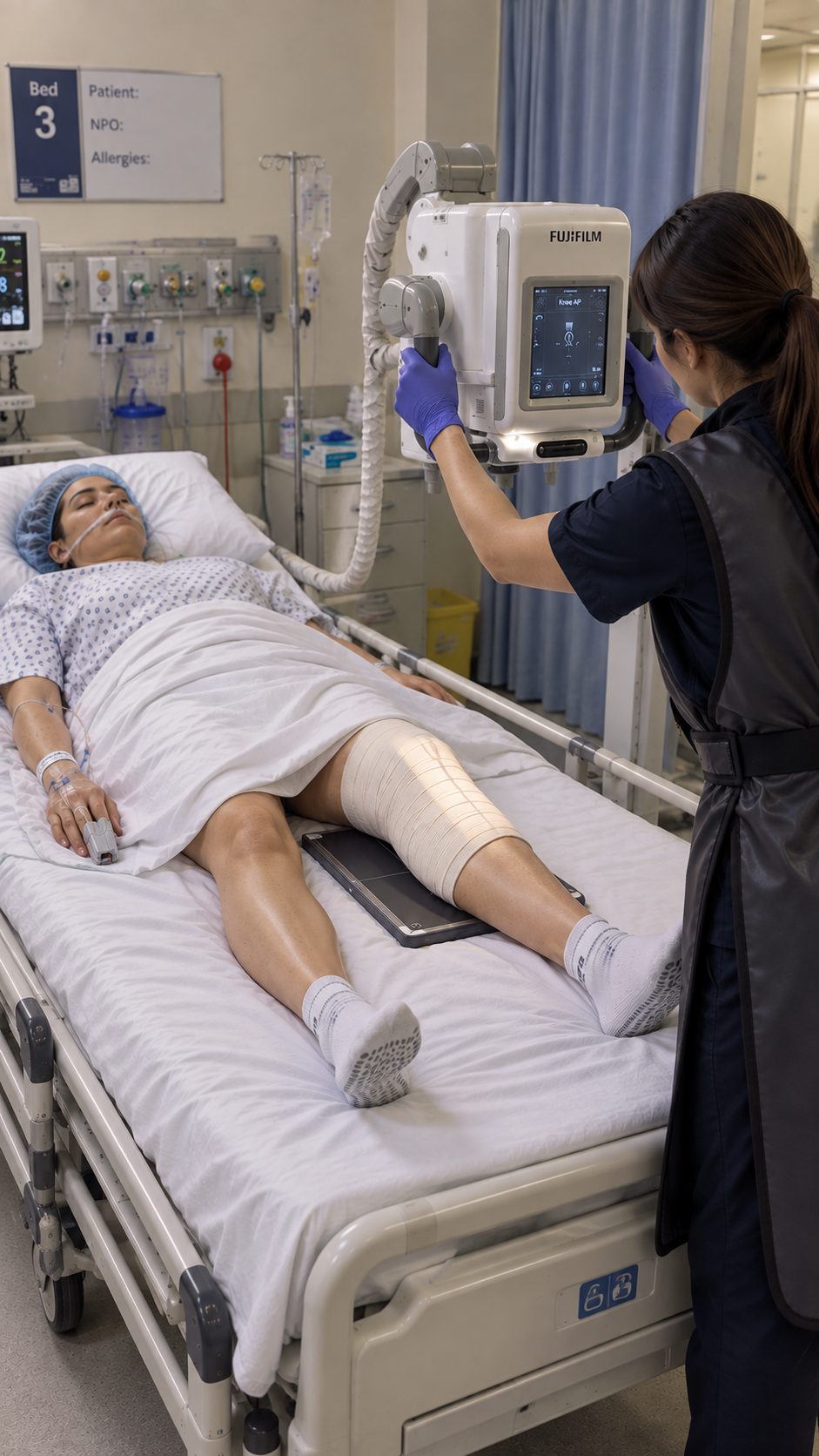
The University of Sydney defines inventiveness as “generating novel ideas and solutions.” For radiographers, this is particularly important because every patient presents differently, and standard positioning and techniques cannot always be applied exactly as described. Patients may be in pain, immobilised, intubated, sedated or unable to move, requiring the radiographer to adapt their technique while still producing a diagnostic image. I have developed this ability through lectures, practical classes and clinical experience throughout my undergraduate and postgraduate studies.
One of my best examples of inventiveness occurred during my placement at a private hospital, where I completed mobile radiography and was exposed to postoperative and trauma patients. Mobile examinations often required me to adapt positioning to the patient’s condition, particularly for patients who could not move independently. For example, when imaging patients following a total knee replacement, I needed to consider how to achieve the required projections while working around pain, limited mobility and the hospital bed. This includes using a horizontal beam for a lateral knee view. I found a useful peer-reviewed article showing why adaptation of positioning is important after TKA. It explains that positioning and limb rotation can significantly affect assessment of knee alignment, meaning radiographers need to carefully adapt positioning to obtain appropriate images:
Khalifa, A.A., Mullaji, A.B., Mostafa, A.M. & Farouk, O.A. (2021) ‘A protocol to systematic radiographic assessment of primary total knee arthroplasty’, Orthopedic Research and Reviews, 13, pp. 95–106. doi: 10.2147/ORR.S320372.
Similarly, when performing mobile chest X-rays, patients could be intubated or have multiple lines and attachments, meaning I had to consider tube angulation, detector placement and patient safety rather than simply following a standard setup. I also learned to recognise when additional views may be appropriate based on the presentation, such as considering a scaphoid view following a FOOSH injury. In my first graduate position, I want to continue developing this skill by becoming more confident adapting techniques to individual patients while maintaining image quality and radiation safety.
Influence
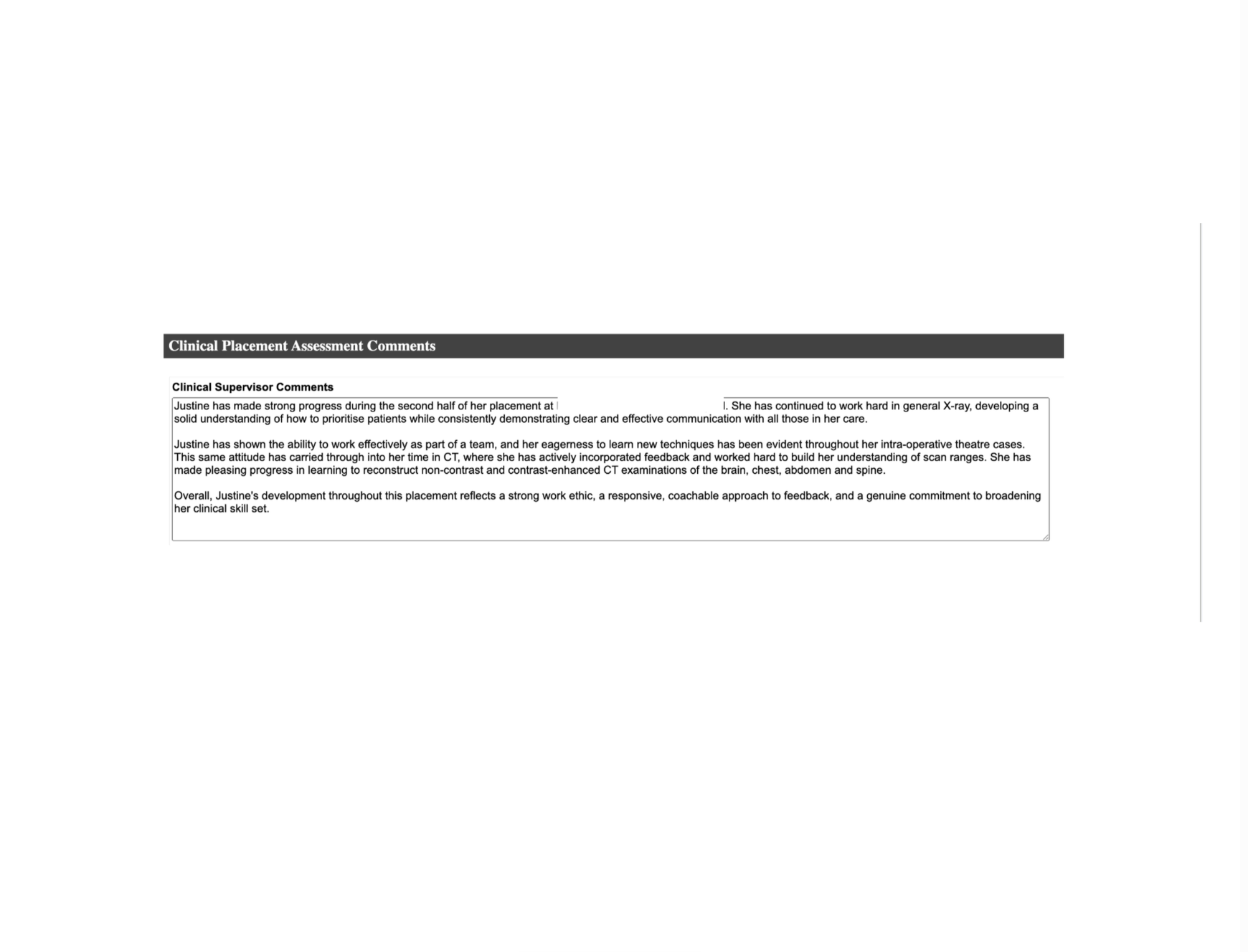
The University of Sydney values influence as the ability to positively impact others, contribute to shared goals and use communication to create meaningful change. Influence is particularly important in diagnostic radiography, as radiographers work collaboratively with patients and multidisciplinary healthcare teams. The quality of our imaging directly influences radiologists’ ability to interpret findings and make informed clinical decisions. Throughout my undergraduate and postgraduate studies, I have developed my ability to influence others through effective communication, teamwork and clinical decision-making. My clinical placements have taught me the importance of advocating for patients, communicating confidently with other healthcare professionals and recognising how my decisions can impact patient outcomes. One of my most valuable experiences was working in theatre during my placements at two different hospitals. Theatre requires constant communication and collaboration between radiographers, surgeons and nursing staff, particularly when using the C-arm. I learnt how important it was to understand the surgeon’s requirements, anticipate the images needed and communicate effectively to achieve the desired projections. I also recognised that the quality and positioning of each image could influence the surgeon’s ability to assess the anatomy and proceed confidently with the procedure. This experience helped me understand that my role extended beyond simply operating the equipment, as my technical knowledge and communication could directly contribute to the success of the procedure. As I transition into my graduate position, I aim to continue developing my influence by becoming a confident communicator, advocating for patients and actively contributing to multidisciplinary teams.
Interdisciplinary effectiveness
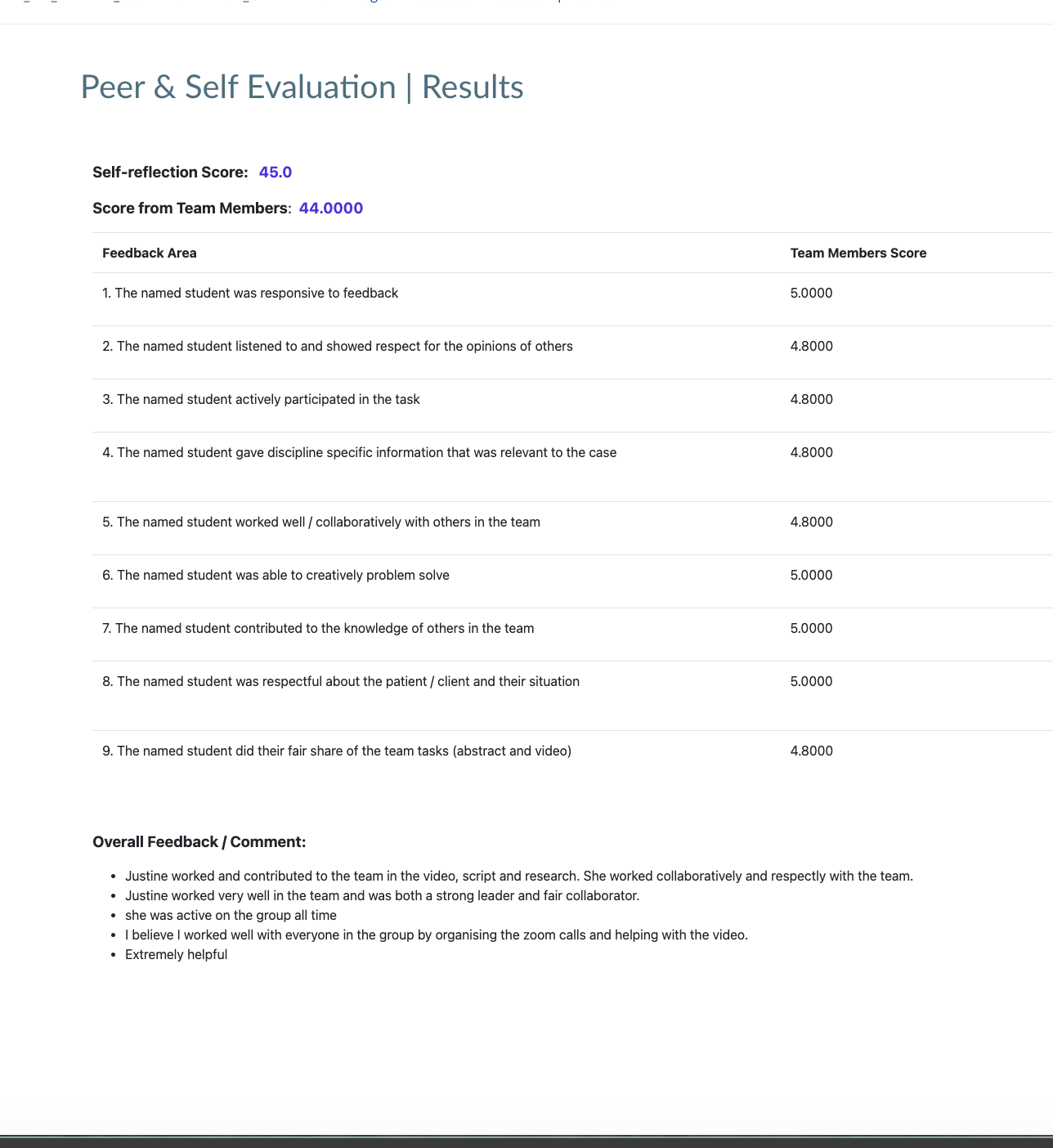
In diagnostic radiography, influence means positively shaping the work of a team and the care a patient receives, whether through leading a group, speaking up for a patient or helping others work towards a shared goal. My clearest example of leadership was the Health Collaboration Challenge, where I worked with students from medicine, pharmacy, physiotherapy, speech pathology and radiography to address planetary health in healthcare. Recognising early that our group needed structure, I took the initiative to organise and run our Zoom meetings, helped divide the tasks and supported the production of our video. I put forward ideas from a radiography perspective while making sure quieter members had space to contribute, which helped the group agree on a shared direction. My team members’ feedback described me as “both a strong leader and fair collaborator,” and the group rated me 5 out of 5 for creative problem solving and contributing to the knowledge of others. In the clinical setting, working in theatre at two hospitals taught me that influence also comes from confident, clear communication. When using the C-arm, I learnt to anticipate the surgeon’s requirements and explain what adjustments were needed to achieve the right projection, as each image affected their ability to proceed with the procedure. On reflection, I am more comfortable leading peers than speaking up to senior staff, and I am still building the confidence to question a request or suggest an alternative in a busy theatre. As a new graduate, I will develop this by advocating for my patients, contributing my perspective within multidisciplinary teams and, in time, supporting future students on placement.
Create Your Own Website With Webador