

Learning skills & development
This section reflects my core competencies, critical evaluation, and ongoing professional development developed throughout my clinical practice and academic study.
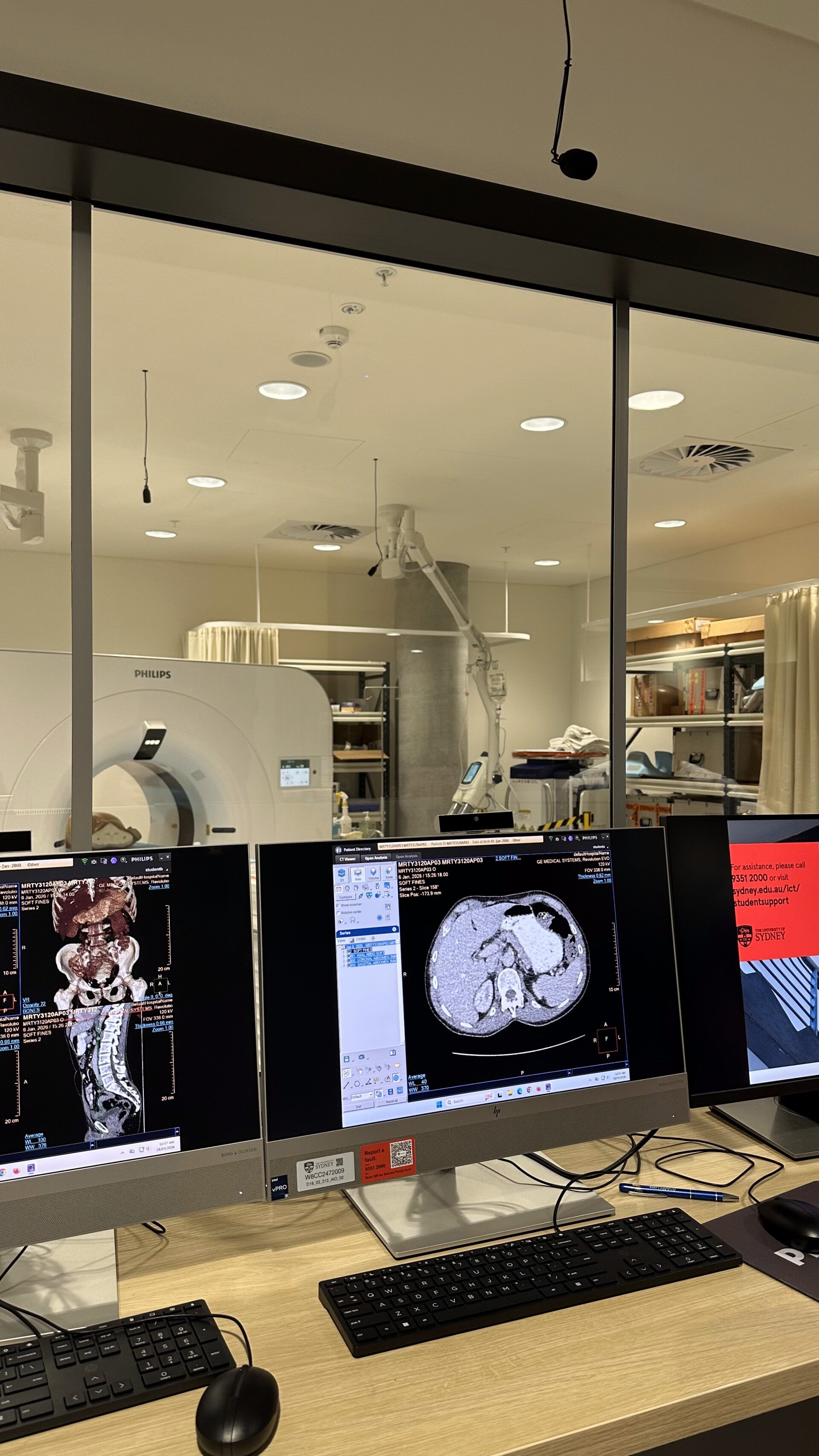
Critical thinking and clinical decision-making
Radiography requires practitioners to think critically and make informed decisions based on the patient, clinical history and imaging findings. Critical thinking is one area I have developed significantly throughout my degree, particularly in learning how to connect theoretical knowledge with clinical decision-making. I have learnt that it is important to look beyond what is immediately visible and consider the wider clinical context when interpreting a situation. This has been developed through OSCEs, case-based learning, clinical placements and research assignments, where I have had to analyse information and determine the most appropriate response. My best example is my urgent findings assignment, where I analysed a deteriorating post-operative patient and considered the clinical presentation alongside the chest X-ray findings. I needed to recognise the significance of the suspected pneumothorax and determine the appropriate escalation pathway rather than simply identifying the abnormality. This also required me to consider the roles of different members of the healthcare team and how timely communication could affect patient management. I developed this skill further by learning to prioritise important clinical information and remain focused on patient safety when multiple factors were involved. As a new graduate, I expect my critical thinking to continue developing as I encounter a wider range of examinations and presentations. It will be particularly helpful when recognising urgent findings, assessing whether images answer the clinical question, prioritising patient needs and deciding when findings need to be escalated to a senior radiographer or medical team.
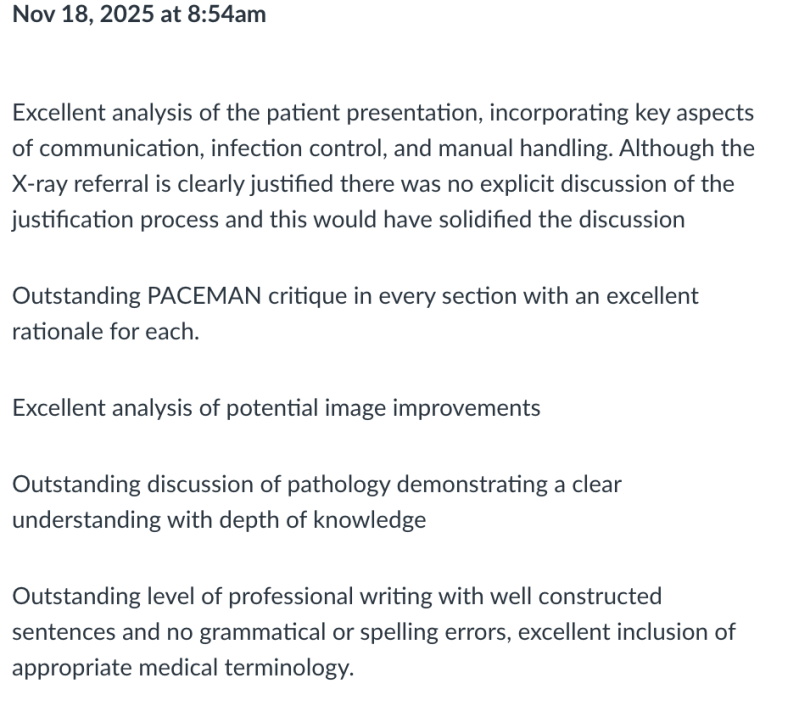
Reflective practice
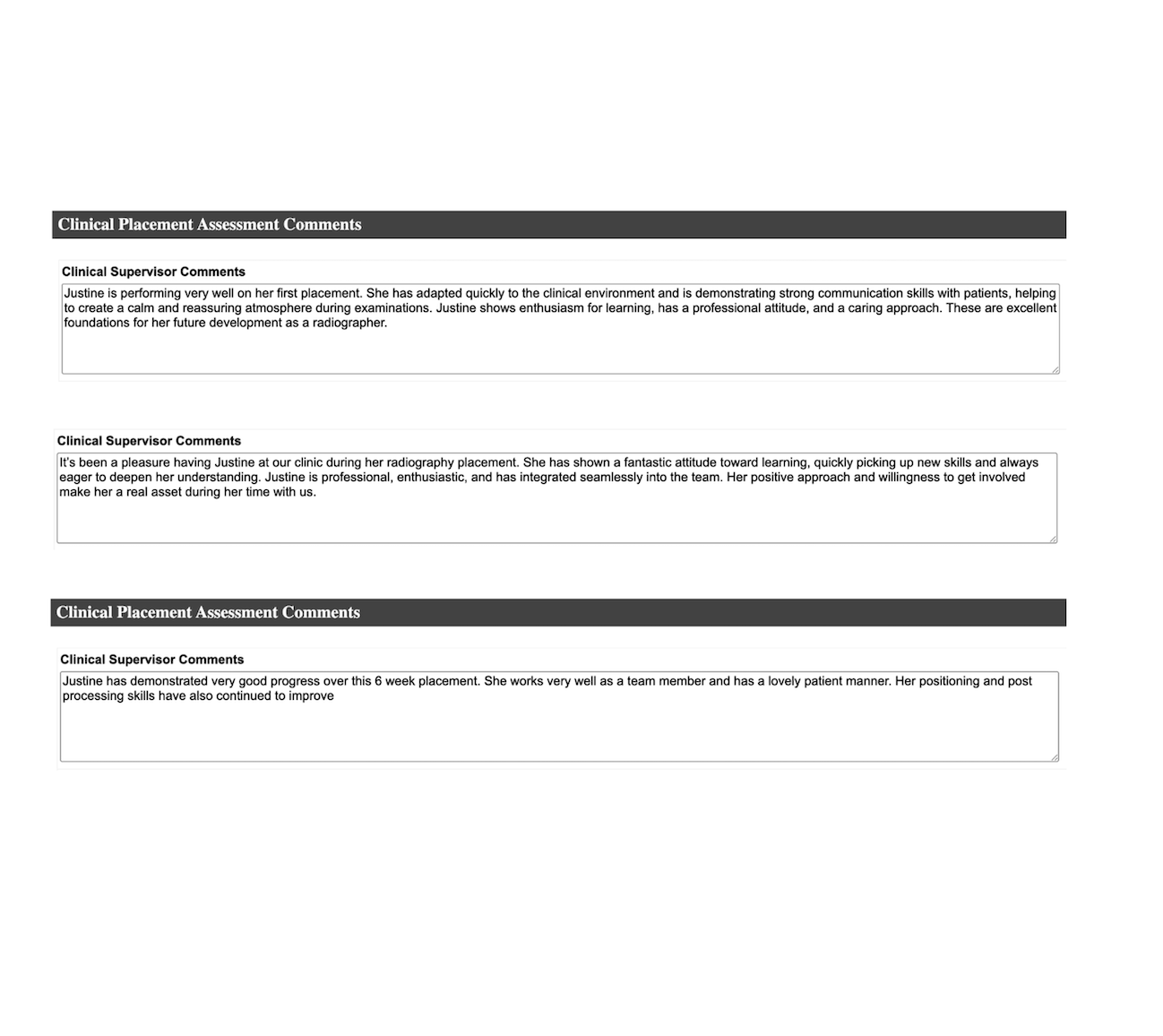
Reflective practice is important in radiography because developing clinical competence requires practitioners to recognise what went well, identify areas for improvement and apply these lessons to future practice. Reflective practice is an area I have developed throughout my degree, particularly as I have progressed through different clinical placements and become more confident in receiving feedback. The most important part of this for me has been learning to reflect on my own performance rather than relying entirely on someone else to identify areas for improvement. My best examples have come from clinical placement, where I received feedback from radiographers after examinations and was able to apply it to subsequent patients. For example, feedback on positioning, communication and technique helped me become more aware of small changes I could make to improve both the patient experience and the resulting image. I have also learnt to reflect on how I manage my time and prioritise tasks, particularly when working in busy clinical environments where several patients or examinations may require attention. Developing this awareness has helped me become more organised while still recognising when patient care needs to take priority. I developed this skill particularly as I became more independent throughout my placements and started actively seeking feedback rather than waiting for it. As a new graduate, I will continue using reflection to identify areas for development and build on my clinical experiences. It will be particularly helpful when adjusting to increased responsibility, managing competing priorities and developing confidence as I progress towards CT practice.
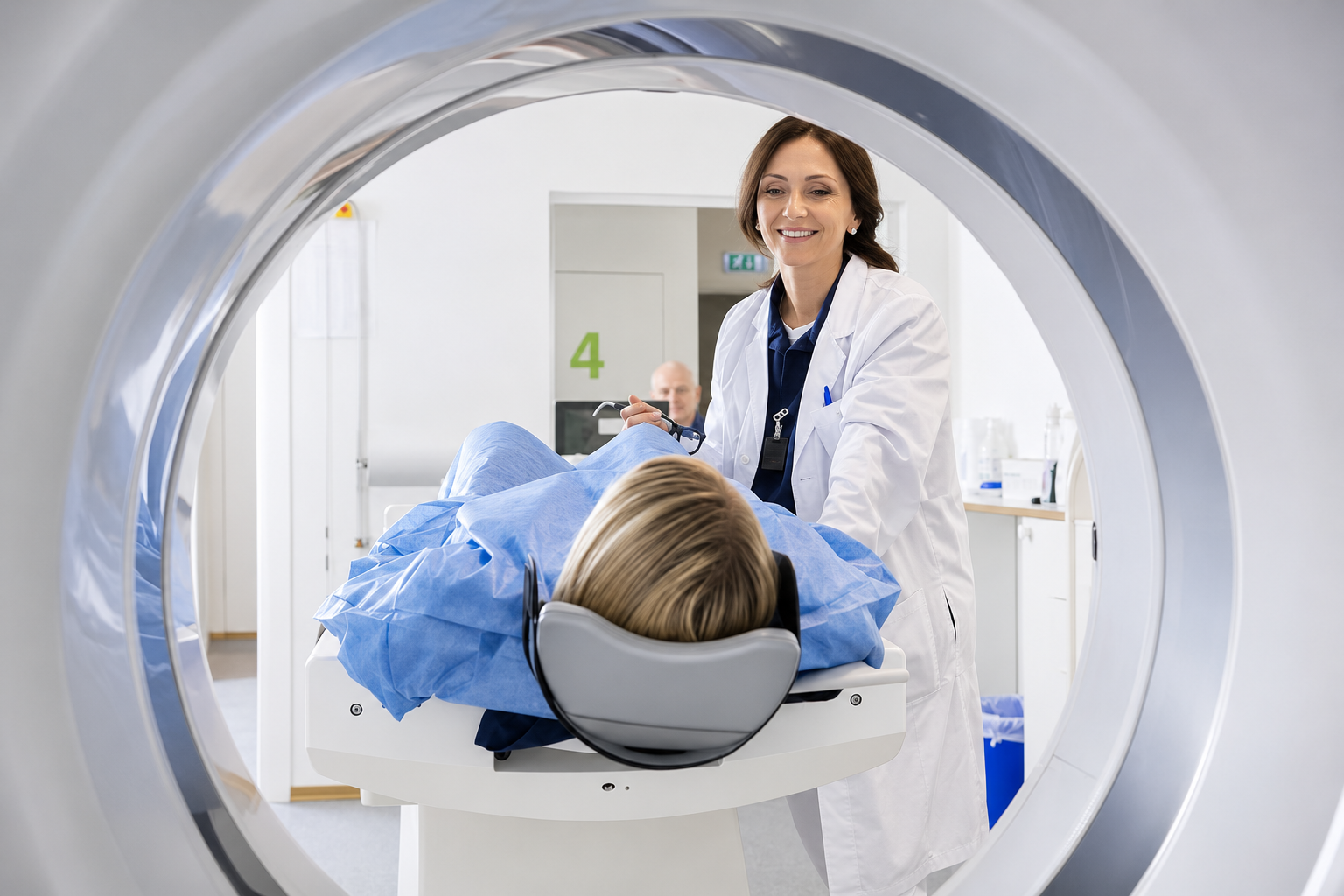
Self-directed learning
Building on my ability to critically evaluate situations and reflect on my clinical experiences, self-directed learning has become an important part of my development as a radiography student. Learning skills are important in radiography because the profession is constantly developing, requiring radiographers to take responsibility for maintaining and expanding their knowledge. The learning skill I have been most successful with is self-directed learning, particularly when I identify gaps in my own knowledge. The most important aspect of this skill has been learning to recognise what I do not know and actively seek reliable information to improve my understanding. I have developed this through literature reviews, group assignments and clinical placement, where I have often needed to research topics beyond what was directly covered in lectures. My best example is completing literature reviews as part of a group assignment, where we worked collaboratively while also being responsible for individual components of the research. This required me to manage my own workload and deadlines while communicating with group members, contributing to shared discussions and ensuring my individual work supported the overall project. I independently searched databases such as PubMed and evaluated research to develop evidence-based conclusions. This taught me how to find relevant information, assess the quality of sources and apply research findings to my understanding of radiography. As a new graduate, I can see myself continuing to develop this skill by learning from senior radiographers, researching unfamiliar examinations and seeking additional education when needed. It will be particularly helpful when learning new CT protocols, adapting to different equipment and continuing my professional development, as I will need to take initiative in expanding my knowledge throughout my career.

Create Your Own Website With Webador